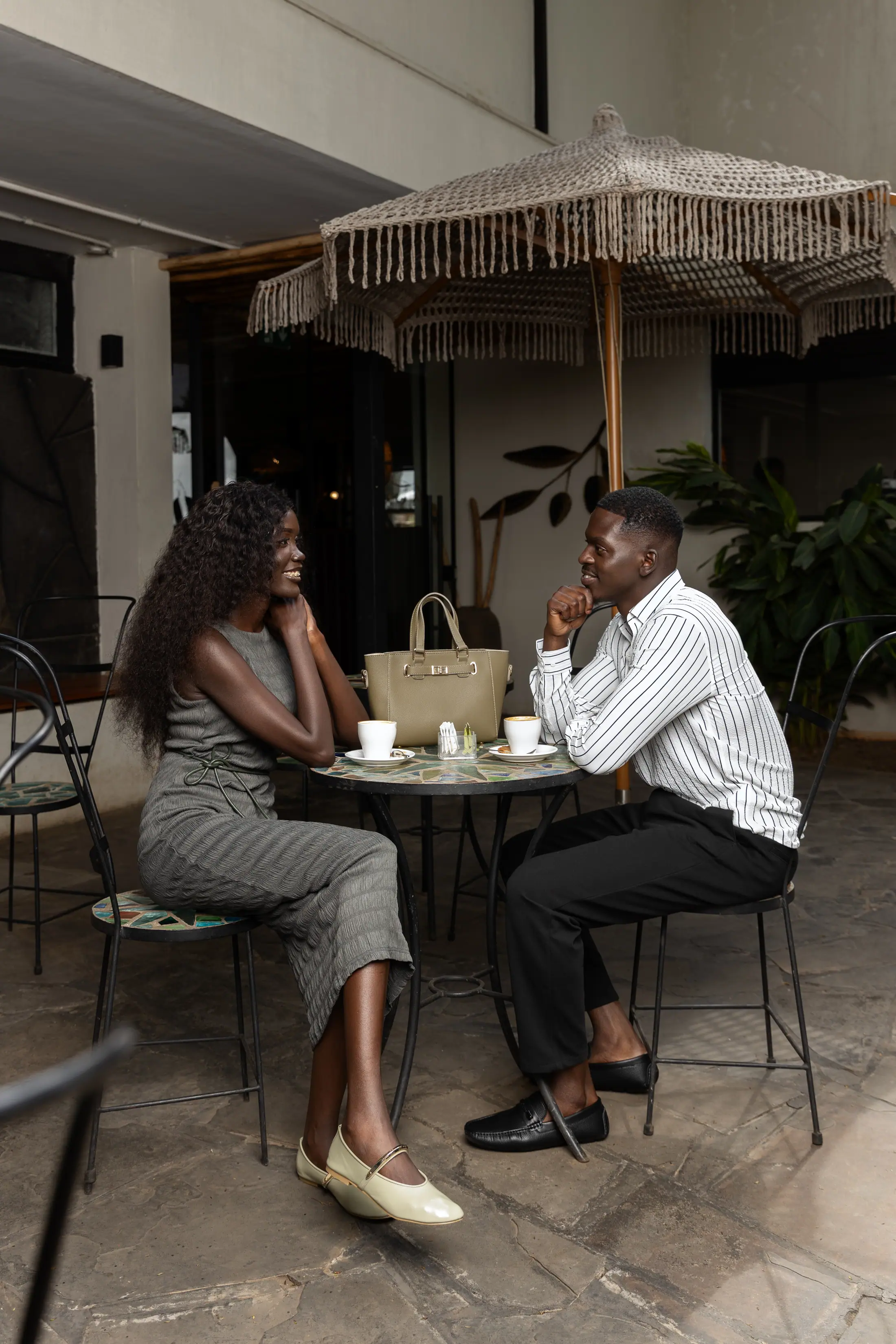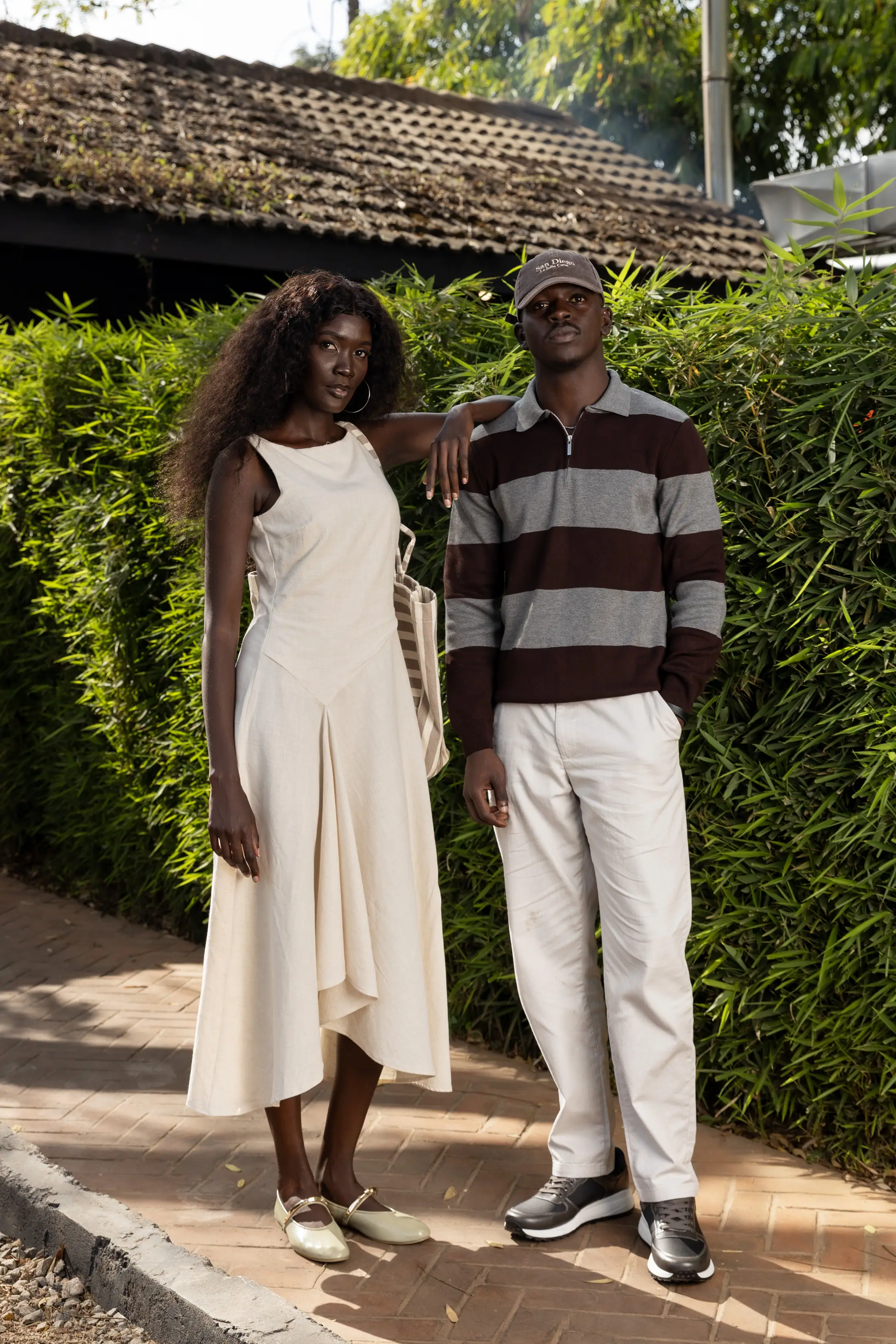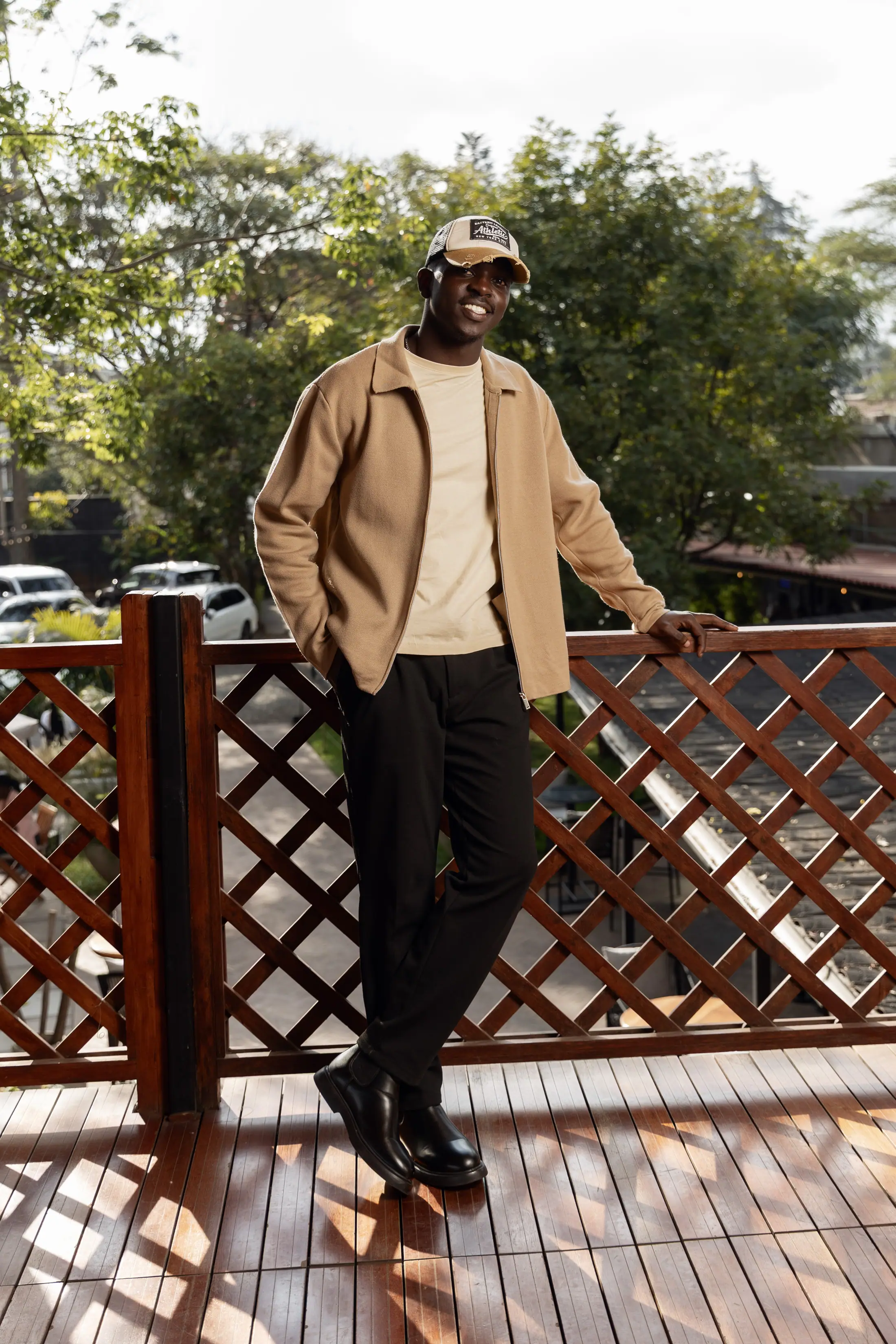
Why every chapter of the LC Waikiki campaign began with a family rather than a garment, and what that order costs and returns.
The order most campaigns run in
Pick the clothes first and you spend the shoot looking for people to fit them. Pick the people first and the clothes have someone to belong to.
Most retail campaigns run the first way, for reasons that are entirely understandable. The collection exists before the campaign does. The buy has been signed off, the hero pieces are known, and the marketing calendar is counting backwards from a launch date. Casting is the last box, filled from a shortlist, a week before the shoot.
We ran it the other way on this campaign, and it changed the work enough to be worth writing down.
Three weeks, three routes
Casting ran across Nairobi over three weeks, through three channels that produce different kinds of people.
Agency lists came first, because they are fast and the people on them can be relied on to turn up and take direction. What they cannot do is surprise you. An agency book in any city converges on a look, because the agencies are selecting against the same brief everybody else is.
Open calls in Ngara came second. Slower, noisier, and the reason several faces in the final campaign had never been on a set before. The hit rate is low and the hits are the ones that make the campaign.
The third route was simply asking people. Someone at a table, someone waiting for a matatu, someone whose child would not sit still. About a third of the eventual cast came from a conversation that began with an apology for interrupting.
None of these three is sufficient alone. Agencies give you reliability, open calls give you range, the street gives you the specific person you did not know you were looking for.
What we were casting for
Not faces. Relationships.
A family in a campaign is four people who have to look like they know each other. That is not a thing you can assemble from four individually excellent casting choices. Two of them will read as siblings, one as a colleague, and the fourth as a person who wandered into the frame.
So we cast in groups from the start, and we cast for behaviour rather than for appearance. What we were watching for on the day was small: whether an adult reaches for a child without looking, whether two people move around each other in a doorway without negotiating it. Those are the things that make a viewer believe a room, and they cannot be directed into existence in the time a shoot allows.
Real families were part of the answer, and only part. A real family that freezes on camera is worse than three strangers who are comfortable together. What worked was a mix, and a long enough call to see who was still relaxed forty minutes in.
The children were the constraint
Childrenswear is the chapter that decides the schedule.
Children work in short windows and they work best before they have understood there is a job happening. That points the whole day one direction: shoot the children first, shoot them early, and be ready before they arrive rather than warming up on their attention.
It also changes what you ask for. A child instructed to look happy produces a face nobody believes. A child playing on a slide, with a camera far enough away not to be interesting, produces the frames that ran. The playground chapter was shot mostly at a distance with long lenses for exactly this reason.
The practical version, for anyone planning a shoot with children in it: budget twice the time, plan for a third of the frames, and put a person on set whose only job is the children. Not a chaperone for compliance, though you need one of those too. Someone whose actual job is keeping the mood right.
What the order costs
Casting first is slower and it front loads risk, and it is dishonest to pretend otherwise.
You are committing to people before you have seen them in the clothes. Fittings become discovery rather than confirmation, and occasionally a piece that was meant to be a hero does not work on the person you cast, which means the styling has to move rather than the casting.
It also stretches the calendar. Three weeks of casting before a wardrobe conversation is three weeks that a compressed campaign does not have, and there are seasons where the launch date simply does not permit it.
What it returns is the only thing that matters commercially. The product is why the campaign exists, but it is not why anyone stops scrolling. Warmth is a room a viewer either believes or does not, and belief is cast, not styled. A campaign that is believed gets watched to the end, and a campaign that is watched to the end is the one that moves anything.
How to tell whether it worked
The test is not whether the pictures are beautiful. Beautiful is available from any competent crew.
The test we use is simpler and harsher: can you tell, from a single frame with the product removed, that these people know each other. If the frame collapses into a group of models the moment the clothes stop carrying it, the casting did not do its job.
The second test is the children. In the final films they look like they belong to the adults standing beside them, and on the day they behaved like it. That is the whole argument in one observation.
Releases, permits and the paperwork nobody photographs
Casting locally means talking to people who have never signed a release before, and that has to be handled properly rather than quickly.
Every person in the campaign signed a usage agreement covering territory, media and term, translated where translation helped, and explained rather than handed over. Several people asked good questions about where their children would appear. A production that cannot answer those questions calmly does not deserve the yes.
For street locations there is a second layer: county film permits, and the practical business of a location that belongs to nobody in particular. The permit is straightforward and worth doing early. The rest is manners, and it is the difference between a corner that welcomes you back and one that does not.
Budget for it. Not because it is expensive, it is not, but because the day it is skipped is the day a shoot stops.
Directing people who are not performers
Roughly a third of this cast had never been on a set. Directing them is a separate skill from directing actors, and the mistakes are predictable.
The first is giving emotional direction. Telling someone to look happy produces a face that is trying to look happy, which reads as exactly that. Giving them something to do produces the expression on its own.
The second is letting the camera be interesting. A person aware of a lens two feet away performs. The same person at fifteen feet with a longer lens forgets, usually within a minute.
The third is talking too much. The most useful thing on those days was long stretches where nobody said anything and the camera kept running. Almost every frame we kept came from the middle of one of those, and not from the take that followed a note.
The commercial case, plainly
For a brand weighing this, the argument runs like this.
Casting is among the cheapest lines in a campaign budget and among the most decisive. A day of additional casting costs a fraction of a shoot day and changes more of the final result than almost anything else you can spend that money on.
Casting locally, in the market the campaign runs in, is what makes the work read as belonging there. A cast flown in produces a campaign that looks like it was made about the market rather than in it, and audiences are unforgiving about the difference even when they cannot articulate it.
And casting first, before wardrobe, is a scheduling decision more than a creative one. It costs weeks at the front of the calendar and saves the campaign from the failure that cannot be fixed in post: a set of images nobody believes.
What we would do differently
Two things.
We would start casting earlier still. Three weeks was enough and was not comfortable, and the difference between enough and comfortable is where the best options live.
And we would film more of the casting itself. Some of the most convincing behaviour happened in the room before anyone thought the shoot had started, and we have it on a phone rather than on a camera. Next season that room gets its own setup.
Rossiter and Co. handled casting, direction and production on this campaign in Nairobi. If you are planning a season and want to talk about what casting locally would look like for it, we are glad to have that conversation.
Common questions
- Why cast before choosing wardrobe
- Pick clothes first and the shoot becomes a search for people to fit them. Pick people first and the clothes have someone to belong to.
- How long does casting take
- Three weeks for this campaign, across agency lists, open calls and street casting. Longer would have been better.
- Do you use real families
- Sometimes, and not always. A real family that freezes on camera is worse than three strangers who are comfortable together, so we cast for behaviour rather than for relationship.
- How do you direct people who have never been on set
- Give them something to do rather than an emotion to perform, keep the camera far enough away to be forgettable, and stop talking.