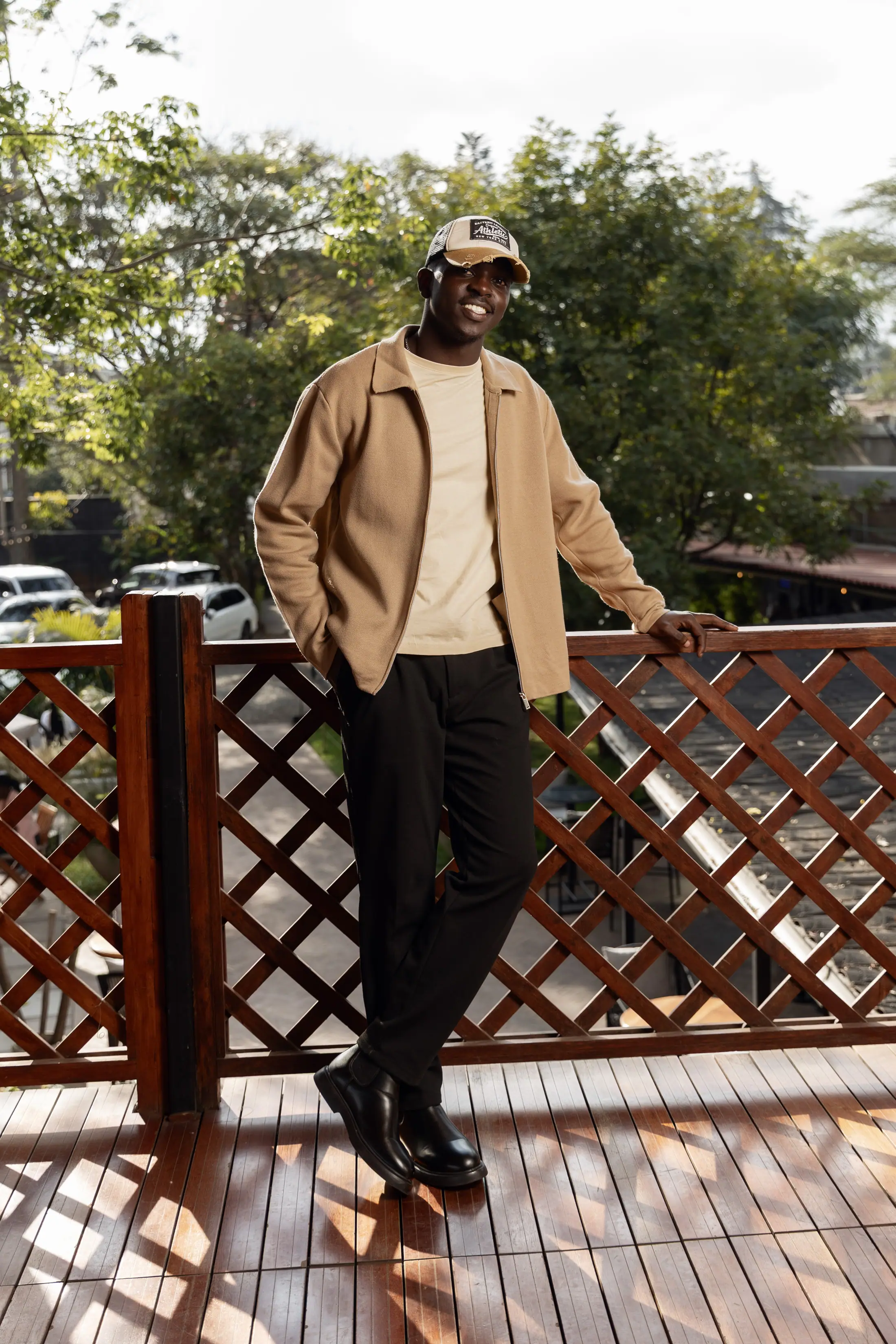
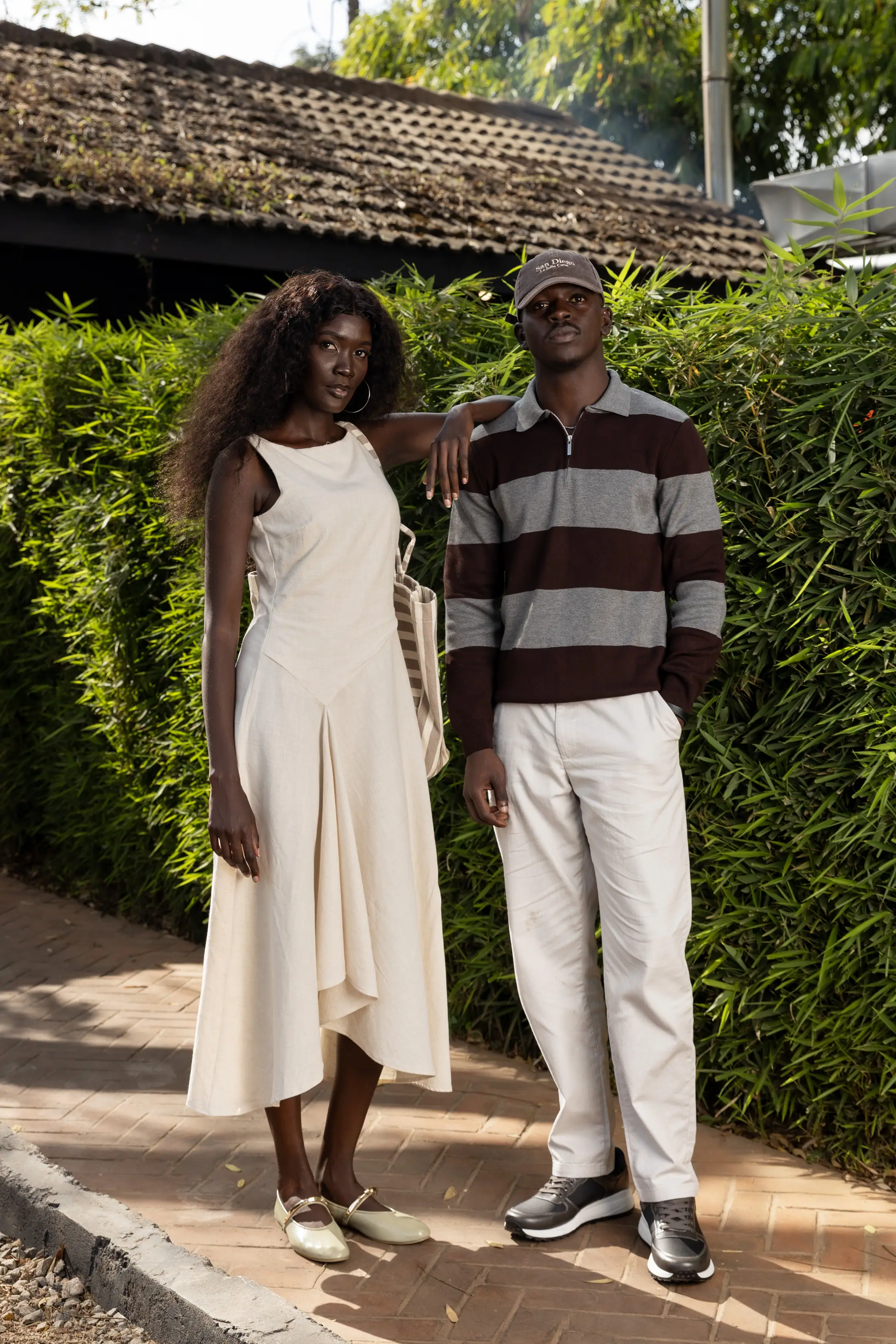
Eleven films and twenty photographs for LC Waikiki, produced end to end in Nairobi across four lifestyle environments, without sending a single frame abroad to be finished.
What was made
A full-season campaign, shot across four environments in and around the city: a family home in Lavington, a rooftop in Westlands, a playground on the edge of Karen, and a street corner that gave us more than the schedule allowed for.
The deliverables were eleven films and twenty photographs, cut and sized for retail, social and out of home. One visual world, moving from intimate family moments to expressive outdoor ones, held together by a single idea: warmth is not created by the weather, it is created by the people, places and moments we share.
Everything happened here
Concept, creative direction, casting, location, styling, photography, cinematography, production, music and post were all handled in house, in Nairobi. Nothing was sent abroad to be finished.
That matters more than it sounds. A campaign graded in another timezone tends to come back looking like somewhere else. Skin reads differently under a colourist who is guessing, and the guess is usually towards a reference they already have. Grading here, with the people who were on the location, means the final films look like the day they were shot rather than like a mood board from a different continent.
The commercial argument is the same argument. Every handoff between countries costs a week and a round of notes, and the notes get worse as the distance grows, because the person giving them was not there. Compressing the whole chain into one city removes the handoffs entirely. The campaign was concepted, shot, cut, scored and delivered by people who could be in the same room on any given afternoon.
Four environments, one world
The four locations were chosen to cover the range a season has to reach without fracturing into four different campaigns.
The family home carries the warmth the campaign is named for. It is where the season is most literal: people indoors, together, dressed for comfort rather than for an occasion. The rooftop is the opposite register, a couple and a city, clothes doing the work of a first impression. The playground is childrenswear that has to survive being run in. The street corner is the one that broke the schedule, in the useful way.
What holds them together is not a colour palette, though there is one. It is casting and behaviour. The same warmth has to be believable in all four, or the campaign becomes a set of unrelated shoots that happen to share a logo.
The street corner, and what unplanned looks like
The street corner was scheduled for ninety minutes and took an afternoon.
We had the location for a set of planned frames. What we did not plan for was how much the corner itself was doing. Passers by, a matatu stopping longer than it should have, a light that bounced off a shopfront in a way no reflector reproduces. The scheduled frames were fine. The frames from the extra two hours are the ones that ran.
There is a lesson in that which is easy to state and hard to schedule for: build slack into the days where the location is doing work you cannot control. Not every day needs it. A studio interior will give you exactly what you planned. A street will give you either less or considerably more, and you cannot tell which until you are standing on it.
Casting before wardrobe
The families were cast before a single garment was chosen.
This is the slower order and it is the reason the children in the final films look like they belong to the adults standing beside them. Pick clothes first and the shoot becomes a search for people to fit them. Pick people first and the clothes have someone to belong to.
Casting ran across Nairobi over three weeks: open calls in Ngara, agency lists, and a good deal of asking people in the street whether they would consider it. Several faces in the campaign had never been on a set before, which shows in exactly the way we wanted it to.
The temptation on a retail campaign is to treat the family as a frame for the product. The product is why the campaign exists, but it is not why anyone stops scrolling. Warmth is a room a viewer either believes or does not, and belief is cast, not styled.
Producing at this scale in Nairobi
Eleven films and twenty photographs in four environments is a real production, and the questions brands ask before committing to one here are always the same three.
Can the crew do it. Yes, and the depth is better than most people outside the market assume. Camera, grip, styling, hair and makeup, art department and post are all available locally at a standard that holds up against work made anywhere. The constraint is not skill, it is scheduling: the good people are busy, so a campaign booked six weeks out gets a different crew from one booked six months out.
What the logistics cost you. Traffic is the tax. A call sheet that ignores Mombasa Road at half five becomes fiction by six. We plan location moves around the city's actual rhythm rather than around map distances, and we do not schedule two distant locations in one day unless one of them is at dawn.
Whether the light cooperates. On the equator it does, reliably, and it is the single most underrated production advantage this city has. Sunrise and sunset land within minutes of the same clock all year. There is no long European summer evening to stretch a day into, and equally no excuse for missing the window.
Delivery, and what a season actually needs
The final delivery was not eleven films. It was eleven films in the sizes, lengths and aspect ratios the season needed, which is a different and larger number of files.
Vertical for social, because that is where most of the audience is. Landscape for anywhere a screen is wider than it is tall. Cutdowns at the lengths each placement enforces. Stills at print resolution for retail, and the same frames resized for everywhere else.
Planning that at the start changes what gets shot. A frame composed for landscape and cropped to vertical afterwards loses either the face or the context, usually both. Composing for the crop from the beginning costs nothing on the day and saves an entire round of post.
It also changes what gets approved. A client reviewing one master film and then discovering the cutdowns do not work is a client in a second approval cycle nobody budgeted for. Showing the sizes together, early, is slower for a week and faster for a month.
Music, made rather than licensed
The campaign was scored, not tracked with library music.
Licensed music does a competent job of filling space and a poor job of belonging anywhere. It also carries a clock: most library licences are term limited by territory and by placement, so the campaign that runs longer than expected, or runs somewhere it was not originally cleared for, becomes a legal question halfway through its life.
An original cue removes both problems. The campaign sounds like itself rather than like whichever track was trending in a stock catalogue that quarter, and the rights sit with the client permanently, for any placement, in any market.
It is also cheaper than most people expect at this scale. Scoring one theme and cutting it eleven ways costs less than licensing eleven tracks, and the eleven films then sound related, which is most of what makes a set of films read as one campaign.
The photography is not a byproduct
Twenty photographs is not what falls out of a film shoot. It is a parallel production that shares the location.
The two disciplines want different things from the same moment. Film wants the movement before and after the frame. Stills want the frame. Shooting them as an afterthought, with a photographer grabbing what they can between takes, produces stills that look like screenshots, because functionally they are.
We schedule them as their own passes, with their own lighting where it differs, on the same locations and with the same cast. It adds time to the day and it is the difference between a campaign with photography and a campaign with film stills.
Retail is the reason it matters commercially. In store, the photograph is the campaign. A shopper standing in front of a print is not going to see the film, and a print made from a video frame does not hold up at that size.
What a brand should take from this
Three things, if you are weighing a season of your own.
Produce in the market you are selling to, if the market has the crew for it. This one does. The work looks like the place, the cost is lower than importing a production, and the cultural read is not something you can buy in post.
Cast before you style. It is the cheapest decision in the campaign and it determines whether anyone believes the result.
Decide the delivery formats before the first shoot day, not after the edit. It is the difference between one production and one production plus a salvage operation.
Rossiter and Co. led this campaign end to end, from the first mood frame to the final grade. If you are planning a season for East Africa and want to talk through what it would take, that is a conversation we are glad to have.
Common questions
- What was delivered
- Eleven films and twenty photographs, sized and cut for retail, social and out of home.
- Was any of it produced outside Kenya
- No. Concept, direction, casting, styling, photography, cinematography, music and post were all handled in Nairobi.
- Can a full season be produced in Nairobi
- Yes. Crew depth across camera, styling, art department and post is stronger than most visiting producers expect. The real constraint is booking lead time, not skill.
- What does producing locally save
- The handoffs. Every transfer between countries costs about a week and a round of notes from someone who was not on the location.