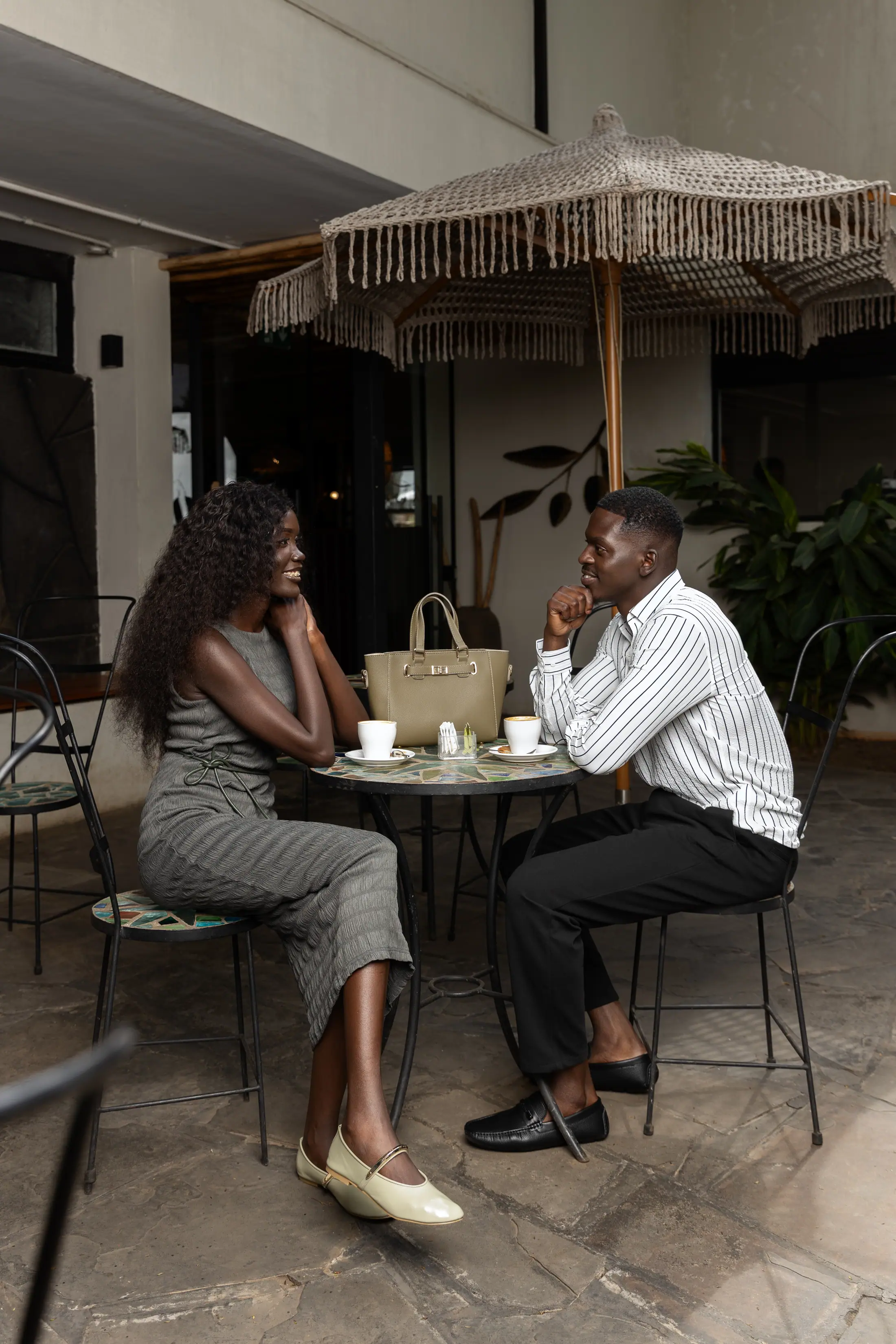
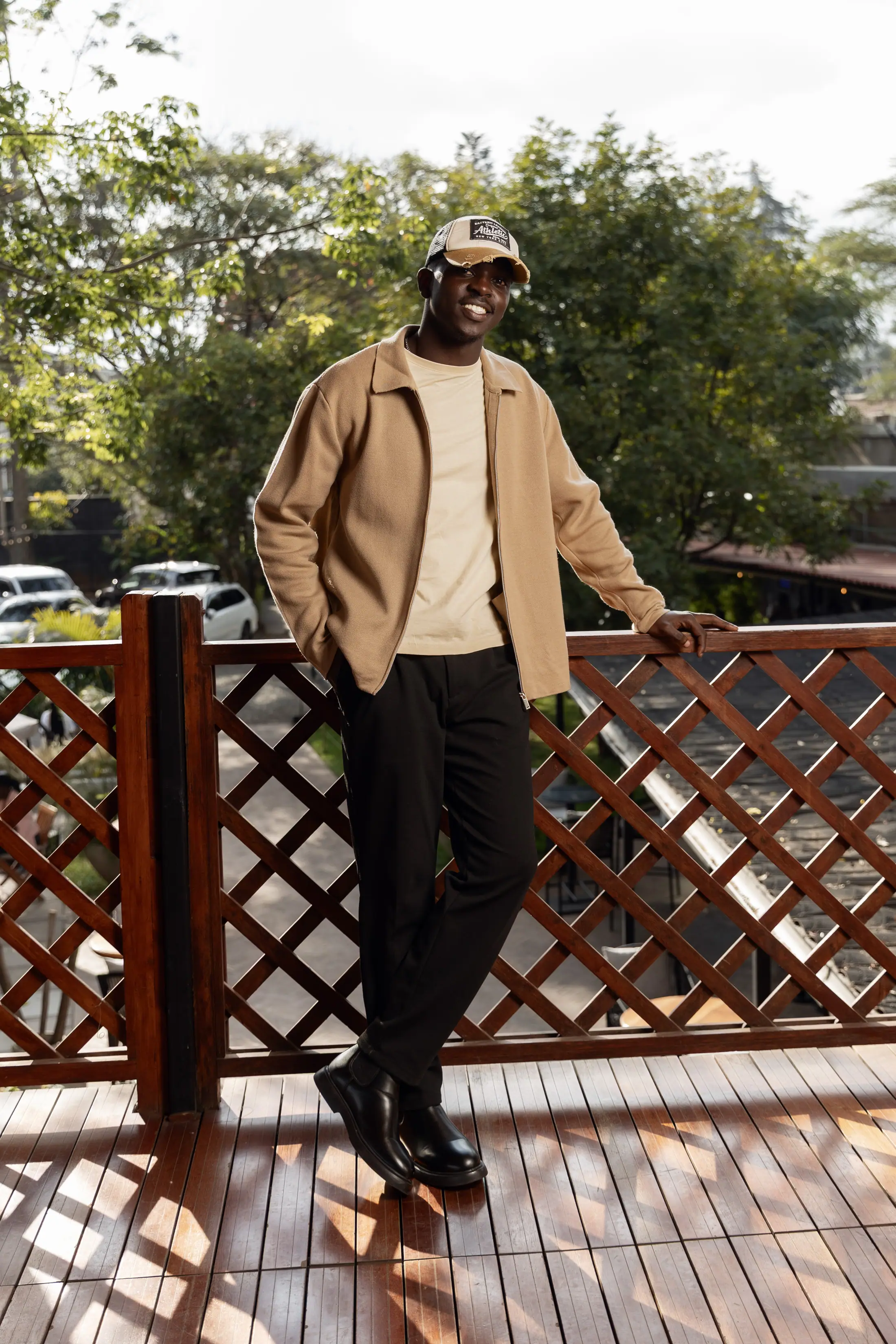
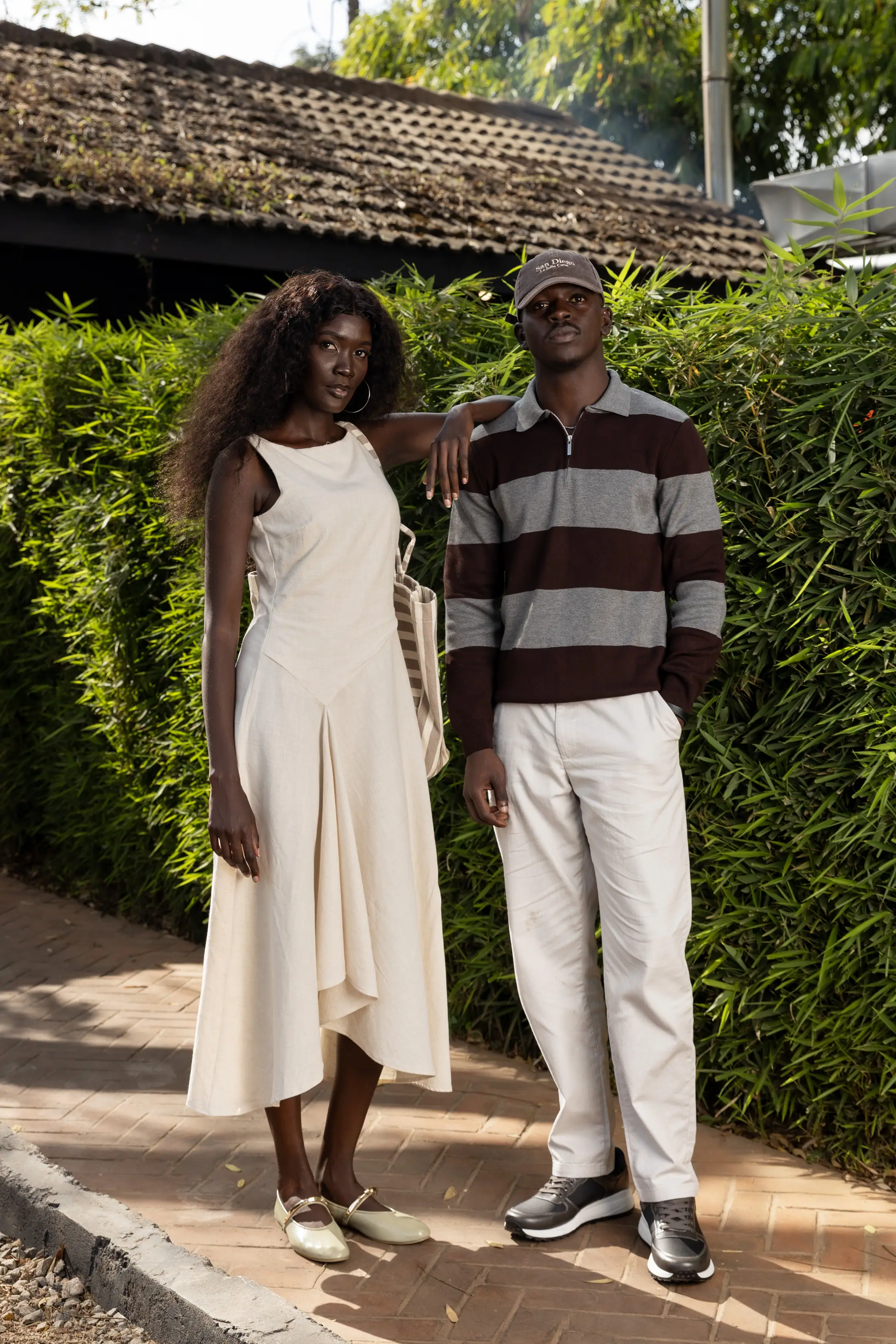
A series about how clothes are actually worn in Nairobi, made jointly by LC Waikiki and Teddy Rossiter. Six films, one idea each, recorded between campaign days.
What the series is
Fashion Talks is a conversation on camera about personal style, modern masculinity, and the things clothing lets a person say before they open their mouth. It runs as short films. One argument per episode, no panel, no host reading questions off a card.
It exists because a retailer and a stylist wanted different things from the same season and realised the overlap was the interesting part. LC Waikiki had a collection arriving and the usual question of how to talk about it. Teddy Rossiter had a running argument about how Kenyan men actually dress versus how they are shown dressing. The series is that argument, given a camera.
Why it carries both names
Most brand content is briefed one way and delivered the other. A brand writes what it wants said, an agency produces it, and the result has the texture of something that was approved rather than meant.
This was shaped together, idea for idea. LC Waikiki brought the clothes and the season. Teddy brought the point of view. Neither half stands up alone: a stylist talking about clothes nobody can buy is a lecture, and a retailer talking about its own collection is an advertisement. Put together, they make something a viewer will sit through voluntarily.
That is worth stating plainly because it is the part most brands skip. Co-authorship is not a credit arrangement. It changes what gets made. When the person on camera has a stake in the argument, they defend it, and a defended argument is watchable in a way an approved script is not.
The format, and why the films are short
Each film runs a couple of minutes. That is a decision, not a budget.
A two minute film has room for exactly one idea. What to reach for at brunch. What changes for a date. What carries a whole weekend without asking anything of you. Each of those is a complete thought, and a viewer can take it away whole. Stretch the same material to eight minutes and you get one idea plus padding, and the padding is where people leave.
Short also means the series can keep arriving. Six films that land through a season hold attention better than one film that lands and stops. A viewer who watched the brunch episode has a reason to come back for the date one, and the brand is present through the season rather than for a week.
The films are recorded in Nairobi, in the gaps between campaign days. Same crew, same city, same light. They are deliberately not shot on a set. A room a viewer recognises does more for credibility than a backdrop.
What Nairobi menswear already had
Kenyan men's style has never been short of point of view. Walk through Kilimani on a Saturday, or look at what is happening in Ngara, and the evidence is unmissable. Silhouettes get tried here that would read as costume elsewhere. Tailoring is taken seriously by people who are not being paid to take it seriously.
What has been in shorter supply is a place to hear that point of view explained by the people carrying it. Plenty of coverage treats African street style as a photograph, a set of images to be admired and captioned from outside. Far less of it asks the person in the photograph why they made those choices, and lets the answer run.
Fashion Talks is an attempt at that room. How a jacket gets chosen. Why a fit reads differently here than it does in London or Istanbul. What a wardrobe is actually for once you stop treating it as a collection of individual purchases.
That framing matters commercially, not only editorially. A brand entering an East African market has two options. It can arrive with a global campaign translated into local media, or it can make something that only makes sense here. The first is cheaper. The second is what people remember.
How it was made, week to week
The production was deliberately light. A small crew, natural light wherever it held, and a schedule built around the campaign days rather than competing with them.
That last point is where the economics sit. The series shares its crew, its locations and its post pipeline with a campaign that was already happening. Booked as a standalone production, six films of this quality would carry six sets of setup costs. Booked alongside a campaign, most of that is already paid for and the marginal cost of another two minute film is a morning.
This is the single most useful thing a brand can take from the way this was produced. If you are already shooting a season, the content series is not a separate line item competing with the campaign. It is the campaign's offcuts, given a structure and a point of view.
We plan for it now at the schedule stage. Two golden hours for the campaign, the middle of the day for interiors, and the talks recorded in the hour that would otherwise be lost to a location move.
What the films are meant to do
Brand films are usually asked to do awareness, which is another way of saying nobody has decided what they are for.
These have a narrower job. They make the case that the brand has a view about how its clothes are worn, and they attach that view to a person whose opinion carries locally. A viewer who watches two episodes has spent four minutes with the brand, voluntarily, at their own pace. That is a different relationship from the one produced by a fifteen second pre-roll they could not skip.
The measurable end of it is straightforward. Completion rate on a two minute film tells you whether the argument held. Return viewership across episodes tells you whether the series is worth continuing. Neither of those is a vanity number, and both are available within a week of publishing.
Sound, and why it is half the film
The talks are the only films on this site with anything to say out loud, and that changes how they are made.
A campaign loop is ambient. It is graded for colour, cut for rhythm, and it works with the sound off, which is how most people will see it. A talk does not survive being muted. If the audio is thin, the argument is thin, and no amount of grading rescues it.
So the talks are recorded with a proper sound setup rather than a camera mic, in rooms chosen partly for how they sound. A tiled cafe with good light and a hard echo is a worse location than a duller room that is quiet. That trade catches people out, because the light is the thing you can see on the day and the echo is the thing you hear a week later in the edit.
The music was scored rather than licensed. Library music does a competent job of filling space and a poor job of belonging anywhere. A short original cue, made for these films, means the series has a sound of its own that carries across episodes, and it removes any question about where the music can be used and for how long.
Where the films run
A series is only as good as its distribution plan, and the plan should exist before the first day of shooting.
These are cut for vertical first, because that is where the audience is, and reframed rather than reshot for anywhere else. Shooting with the crop in mind costs nothing at the time and saves an entire round of post later. A film composed for landscape and cropped afterwards loses either the face or the context, and usually both.
Each episode carries the same opening treatment and the same end card, so a viewer arriving at episode four knows what they have found. That consistency is doing quiet work: it is what turns six separate uploads into something a person can subscribe to in their head.
The films also live on the studio site, which is not a detail. Social platforms rent you an audience and can stop at any time. A page you own, that a search engine can read, keeps working long after the posting schedule has moved on.
What this means if you are the brand
If you are considering something similar, three things decide whether it works.
The first is whether you have a real point of view or an approved one. If the person on camera cannot disagree with you, the films will sound like they cannot, and viewers hear that immediately.
The second is whether you are prepared to make more than one. A single film is an advertisement. A series is a reason to come back.
The third is whether it is being made where your audience lives. A series about Nairobi style shot in a studio in another country will be technically better and culturally weightless. The cost of shooting here is lower and the credibility is not purchasable any other way.
Rossiter and Co. produced Fashion Talks end to end in Nairobi: concept, direction, cinematography, sound, music and post. If you are planning a season and wondering what the content half of it should be, that conversation is one we have often and are happy to have again.
New episodes land through the season.
Common questions
- What is Fashion Talks
- A short film series about personal style and modern masculinity, made jointly by LC Waikiki and Teddy Rossiter, and produced end to end in Nairobi by Rossiter and Co.
- How long is each episode
- A couple of minutes. Each film carries one idea, which is roughly what a viewer will take away whole.
- Can a brand produce a series alongside a campaign
- Yes, and it is the cheapest way to do it. The series shares crew, locations and post with the campaign, so most setup costs are already paid.
- Where are the films made
- In Nairobi, with a local crew, in the gaps between campaign days.